

The prevention of dental diseases is based on maintaining excellent oral hygiene, developing healthy eating habits, and attending regular dental check-ups.
The cause of dental and periodontal diseases is the accumulation of deposits on the teeth and gums.
At present, the only effective way to prevent these diseases is the mechanical removal of deposits using a toothbrush, toothpaste, and other aids, such as dental floss and interdental brushes.
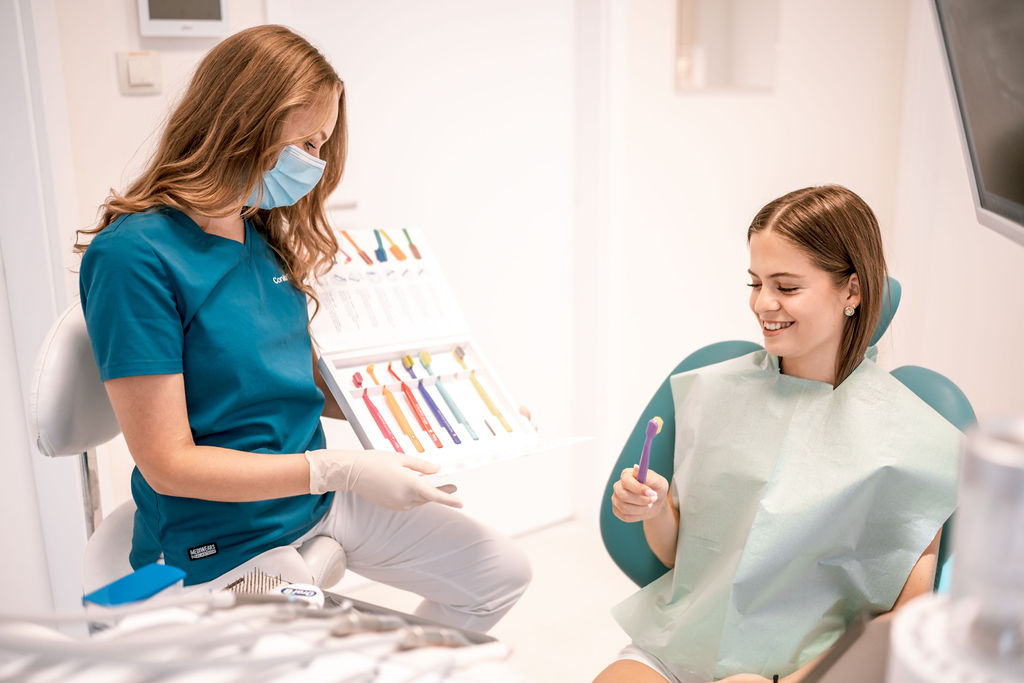
At our practice, we teach you how to use these tools correctly and effectively. Whenever possible, brush your teeth after every meal, but at least twice a day. Regular and thorough dental care reduces the frequency of tooth decay and also slows down the formation of tartar.
Tartar forms when minerals found in saliva become deposited in dental plaque. If you remove plaque regularly and thoroughly, tartar will either not form or will develop much more slowly. Once tartar has formed, it can only be removed by a dentist.
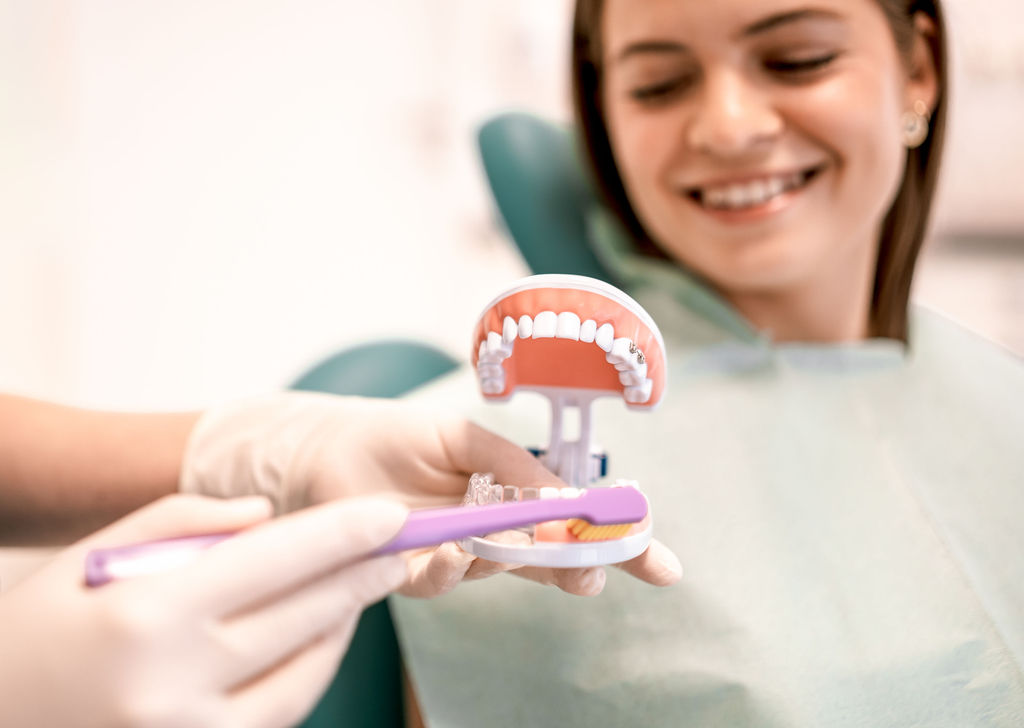
Try to thoroughly brush every accessible surface of every tooth.
On surfaces along the gum line, place the toothbrush at a 45-degree angle to the junction between the tooth and gum and use circular movements on both the outer and inner surfaces. If, instead of circular movements, you use horizontal back-and-forth movements, this can lead to damage to the tooth, known as cervical abrasion, which can only be repaired by a dentist.
Next, clean the chewing surfaces. Wherever the gums are painful or bleeding, you should brush even more thoroughly! At the end of brushing, do not forget to gently clean the back of your tongue. Brush your teeth for at least 3–5 minutes. Choose a toothbrush with a small head and dense bristles, with individually rounded bristle tips.
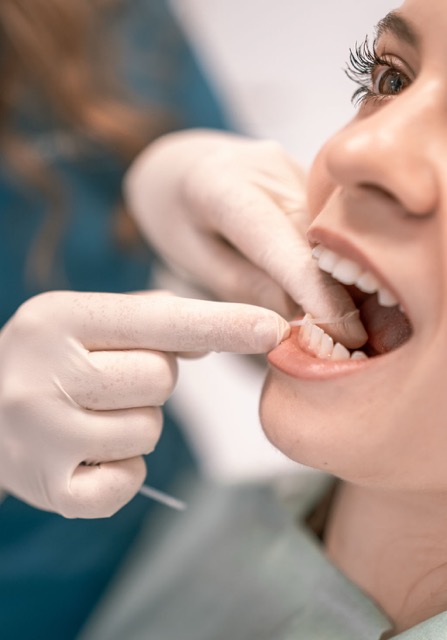
You can remove food debris and plaque between the teeth that cannot be reached with a toothbrush by using dental floss. Use a new, clean section of floss for each interdental space. It is easy to use: take approximately 50–60 cm of floss and tie it into a loop, then hold the floss taut and carefully guide it into the interdental space, taking care not to cut into the gums. By moving the inserted floss back and forth and away from the gum line toward the chewing surface, plaque can be easily removed.
Between main meals, which should be followed by tooth brushing, avoid consuming sugary or sticky foods and drinks whenever possible. If you are unable to brush your teeth immediately after eating, chew sugar-free chewing gum. Thorough oral care at home is important because it helps maintain good oral hygiene between dental check-ups and treatments, helping to prevent tooth decay, tartar formation, and gum disease.
Having fresh, healthy breath is an important part of balanced and respectful social interaction. Poor oral hygiene, along with its many unpleasant consequences, can cause an unfavorable impression in any community, whether it is the family, circle of friends, or workplace.
Careful tooth brushing after meals, cleaning every area of the teeth while avoiding injury to the gums – using downward movements for the upper teeth and upward movements for the lower teeth – is the first rule for maintaining a healthy oral cavity and fresh breath.
An oral irrigator is a useful aid that can thoroughly clean hidden areas and interdental spaces, while its water jet can be adjusted to the desired intensity to gently stimulate the sensitive gums.
Plaque-covered, tartar-stained, or even decayed teeth, however, are “breeding grounds” for bacteria that cause inflammation of the gums and oral mucosa.
Poorly fitting or worn crowns, as well as improperly fitted or inadequately maintained dentures in older people, can also contribute to painful diseases of the oral cavity.
The primary aim of tooth brushing is to remove as much plaque and deposit as possible from the teeth and tooth necks. Toothpaste performs this task most effectively with the help of fluoride and microscopic particles. As soon as a baby's first tooth erupts, brushing in the morning and evening should become part of the daily routine, even if it does not initially resemble the way adults brush their teeth. Cleaning before bedtime is particularly important.
During sleep, less saliva is produced to protect the teeth, allowing sugar-containing plaque to remain acidic for much longer and damage the teeth. There are many toothpastes specifically designed for children. Initially, we clean the child's teeth using the index finger wrapped in a soft cloth, and only once the child has become accustomed to having their teeth cleaned do we begin proper tooth brushing with a children's toothbrush.
Young children usually find it great fun to try brushing their own teeth from an early age, but this does not mean that they do not need to be taught frequently and patiently. Children's motor skills generally become sufficiently developed by around the age of 10 for them to brush their teeth thoroughly and reliably on their own. Until then, they should occasionally be shown the correct movements to imitate, and they should not be given an electric toothbrush to use.
There is a well-known and timeless principle: “Treating changes detected at an early stage is easier and has a better prognosis than treating neglected diseases accompanied by significant symptoms.”
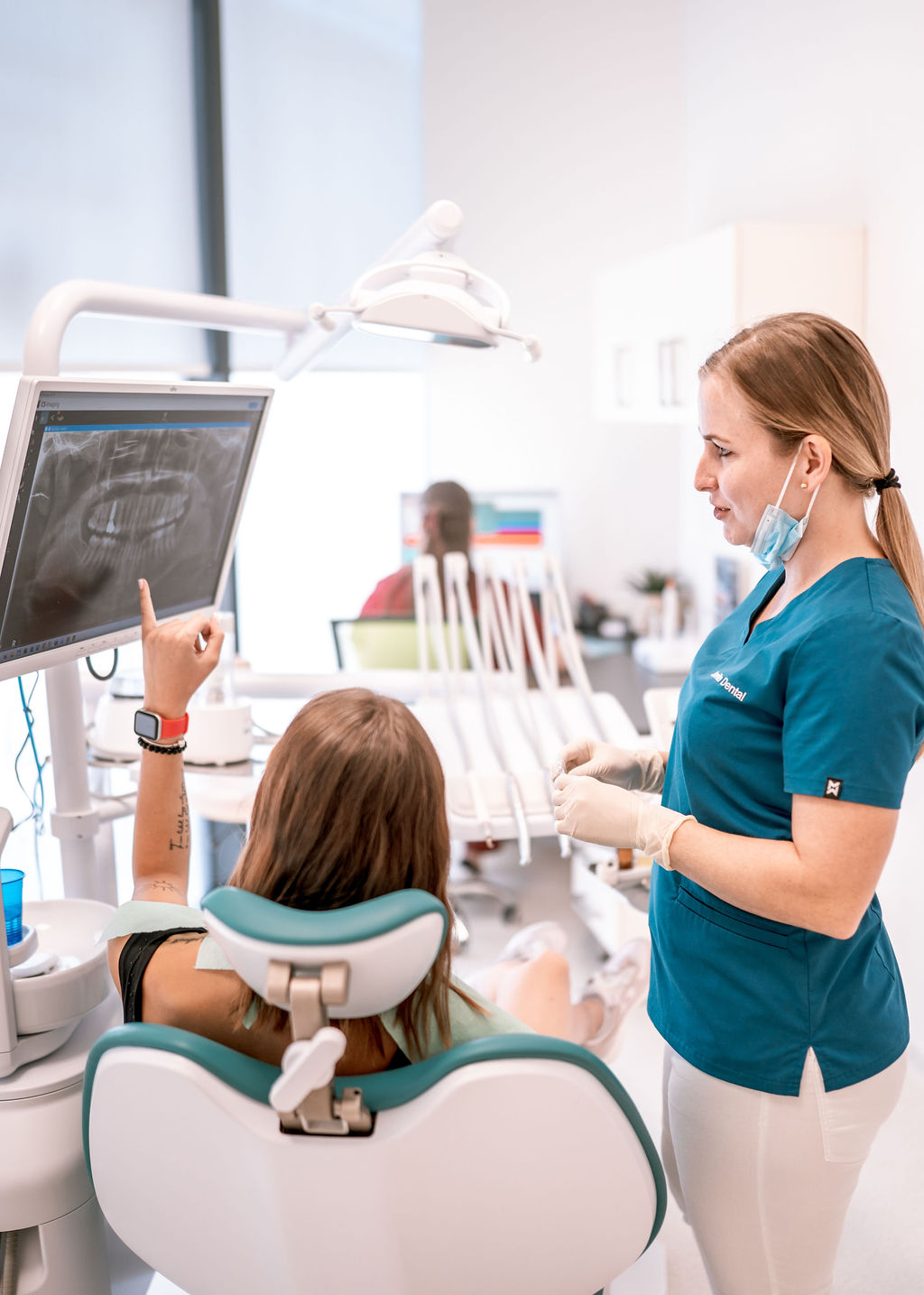
Ideally, you should have a dental check-up every six months. During the check-up, we assess the condition of the teeth and gums and also check whether fillings and dental restorations are in good condition.
We inform you about any potential problems or defects, as well as the available treatment options.
We also examine the other structures of the oral cavity in order to detect tumors at an early stage.



4.9/5
Google Rating
20+
Years of experience
10.000+
Happy patients

